
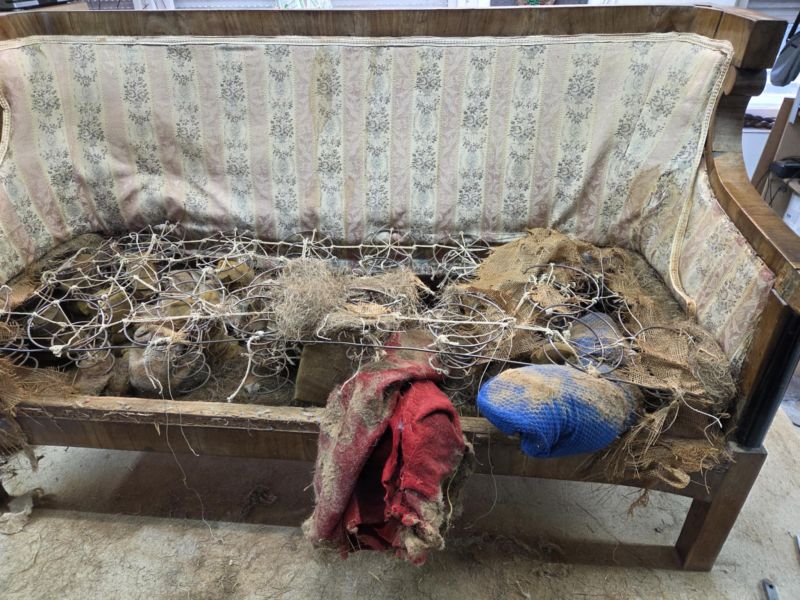
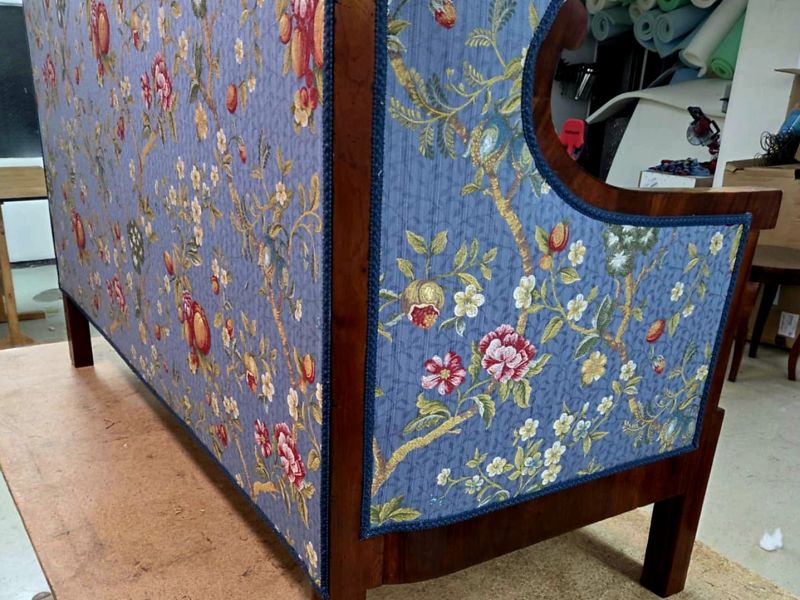
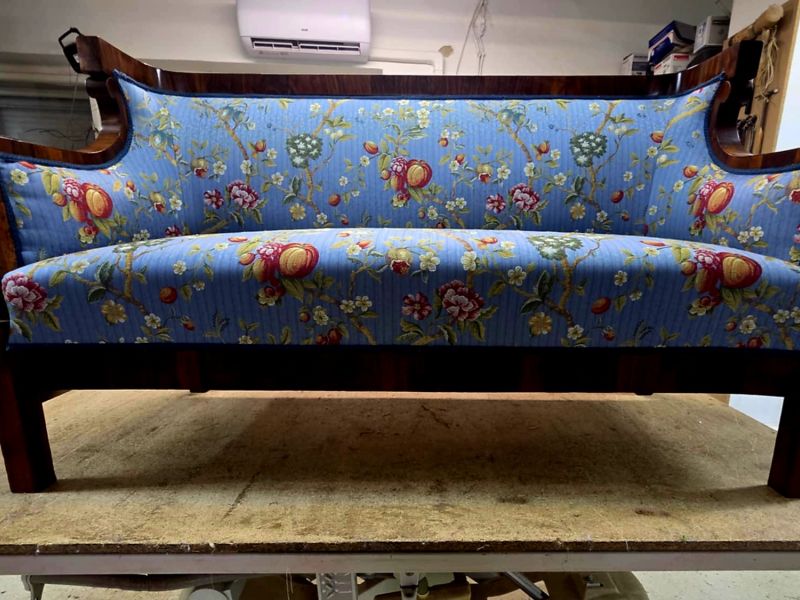
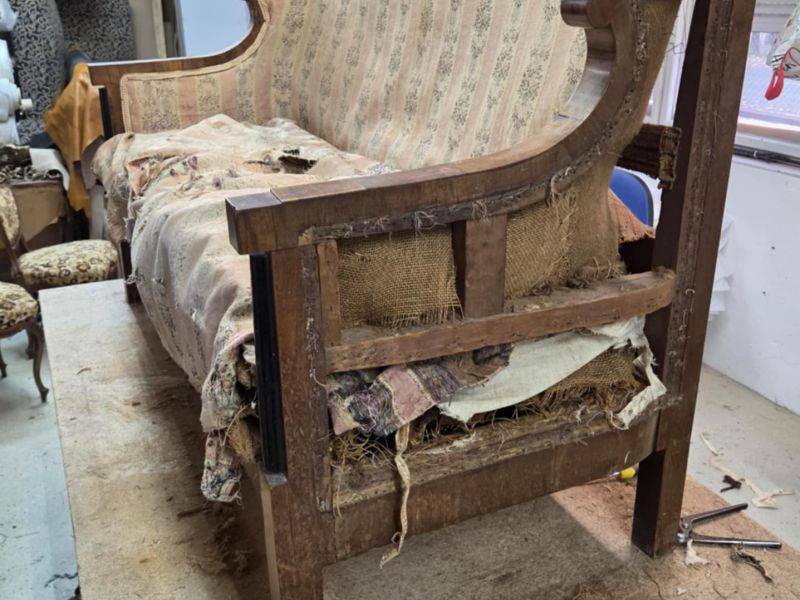
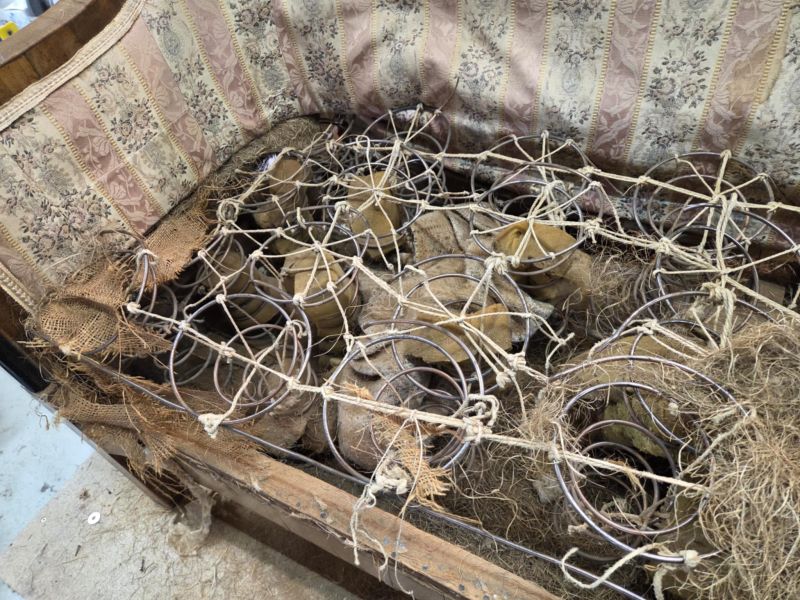
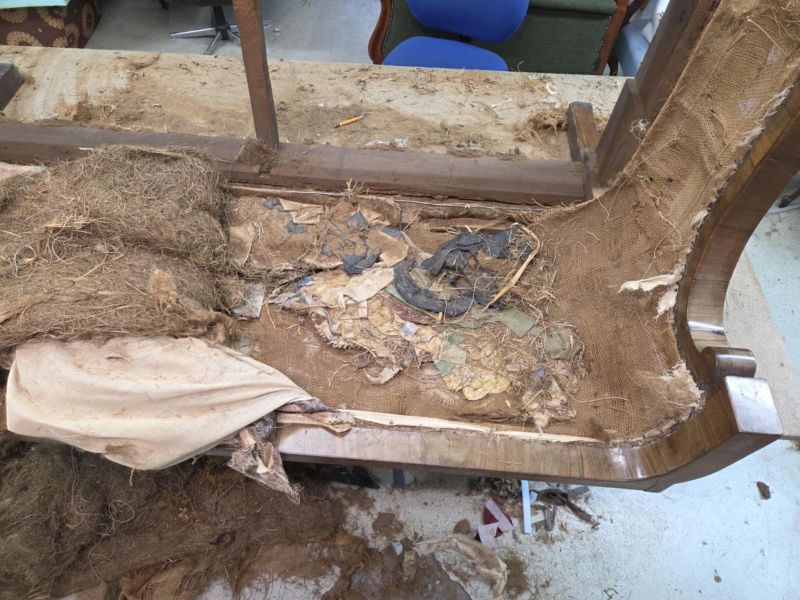
When this biedermeier sofa arrived at our workshop, it immediately became clear that very serious work would be needed here. In the condition shown in the picture, with its torn and musty interior, disintegrating, cracked walnut veneer – we would need to eliminate the traces of decades of neglect.
As we began work, during disassembly the structural details confirmed that we were dealing with an original, period piece. It was clearly visible that all the joints were made by hand – uneven, with no two pieces alike. The hand-forged springs were still in their places; in short, everything indicated that the sofa was made sometime between 1825-1845, probably in a Central European workshop.
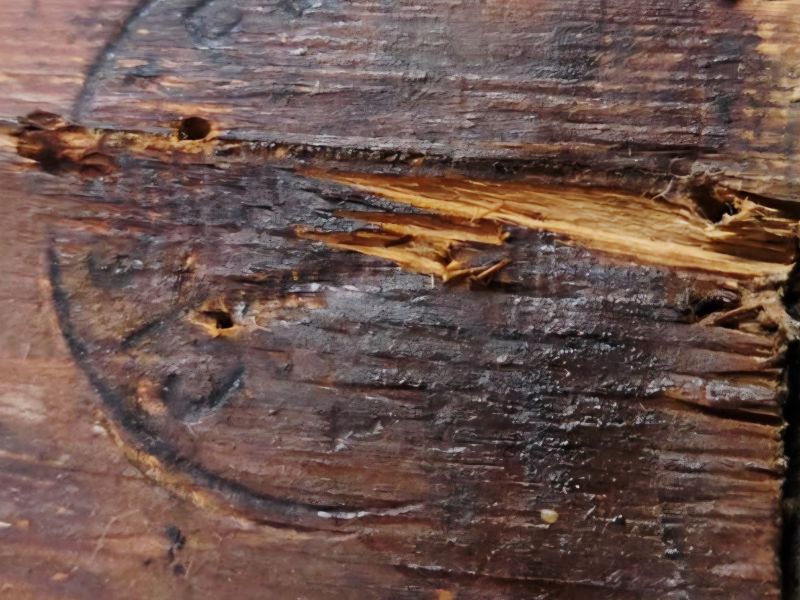
I was examining the wooden frame when I found an interesting hand-stamped (perhaps) maker's mark.
During the biedermeier period, furniture making predominantly took place through individual workshop production, so a unified marking system similar to goldsmithing did not develop. Nevertheless, some masters marked their work with maker's marks: handwritten or brush-painted names, monograms, more rarely with burned-in stamps, mostly on non-visible parts of the furniture. These marks did not serve decorative purposes but can be interpreted as workshop identifiers and as the master's personal acceptance of responsibility. From a collector's and art market perspective, such period maker's marks are of paramount importance, as they authenticate the piece and carry valuable information about its origin, creating a direct connection between the object and its creator.
But unfortunately all my efforts to discover the identity of the master/manufactory prooved unsuccessful.
In terms of structure, the furniture is built on a pine frame covered with walnut veneer. It's important to know that this is not the same as modern veneer – veneer is a thin, 0.5-2 mm wood sheet, cut by machine, while this veneer is a thicker, 2-4 mm layer that was traditionally made with hand or pit saws, more durable and specifically characteristic of 19th-century quality furniture.
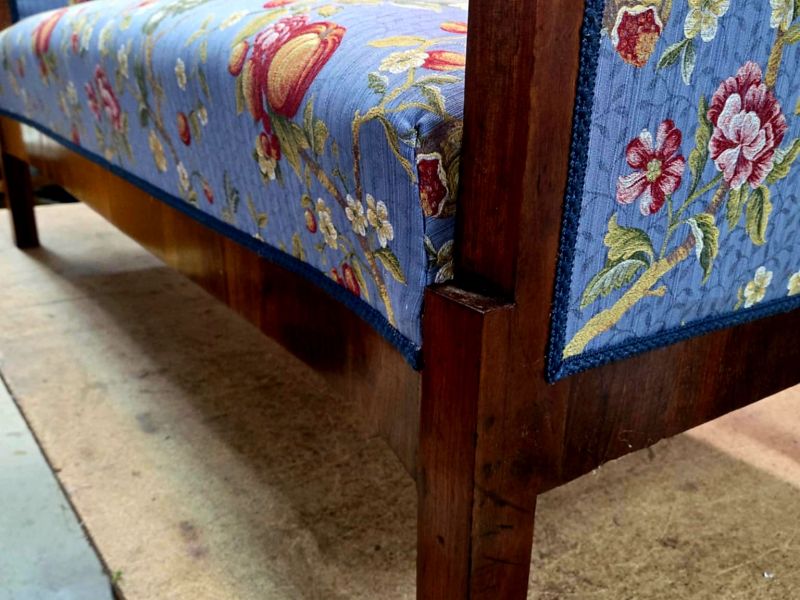
Where the original springs are in such fantastic condition, that always represents true value, so it never occurred to us to use new ones. We reinforced and cleaned them and put them back in place. The upholstery was done using traditional techniques: horsehair, cotton wadding, and linen canvas replaced the interior that had been stuffed with all kinds of materials. The woodwork was performed by excellent colleagues: every centimeter of the walnut veneer was sanded by hand and treated with classic shellac polish – the same method used in the 19th century.
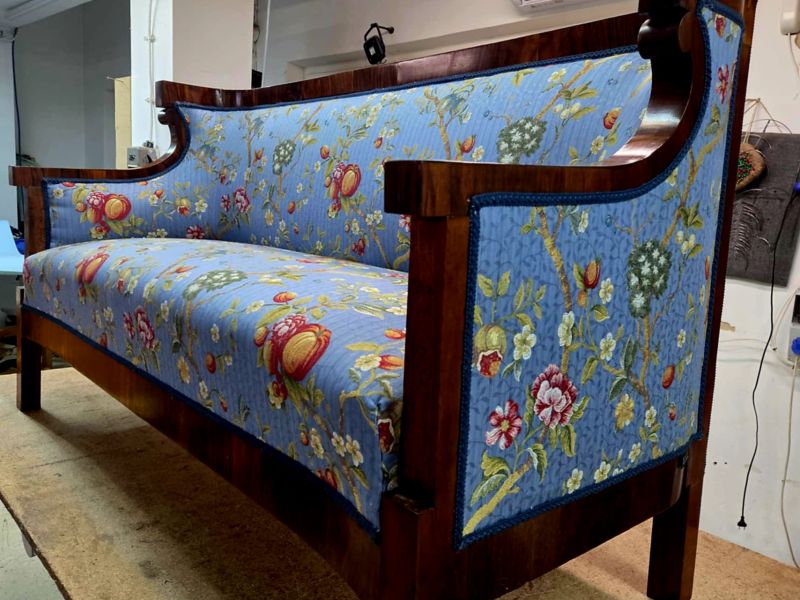
The sky-blue, floral fabric with tulips and colorful flowers chosen by the client is a bold choice that pays homage to the Biedermeier era's floral patterns while giving the piece a modern color palette, and the vibrant blue beautifully highlights the warm brown tones of the walnut veneer.
This sofa is now ready for decades to come, because the nearly two-hundred-year-old frame, traditional upholstery techniques, and the professionally restored structure and veneer ensure this.