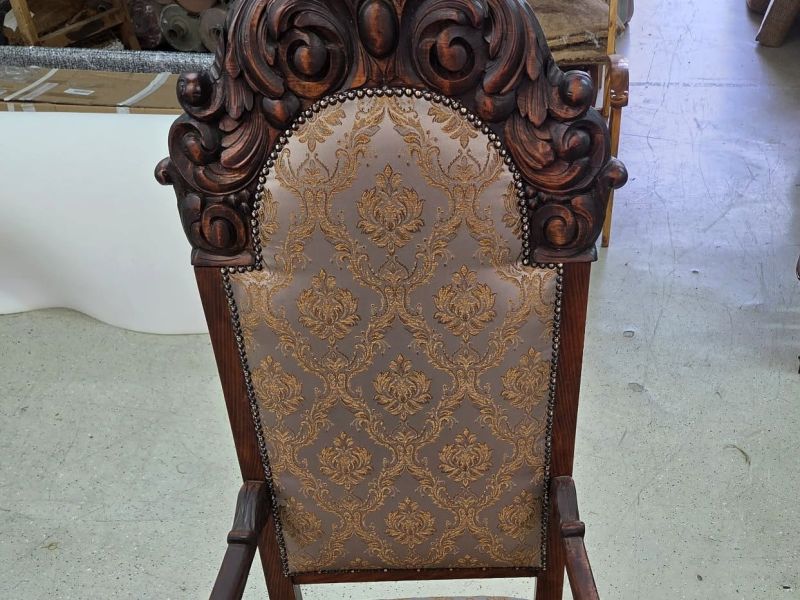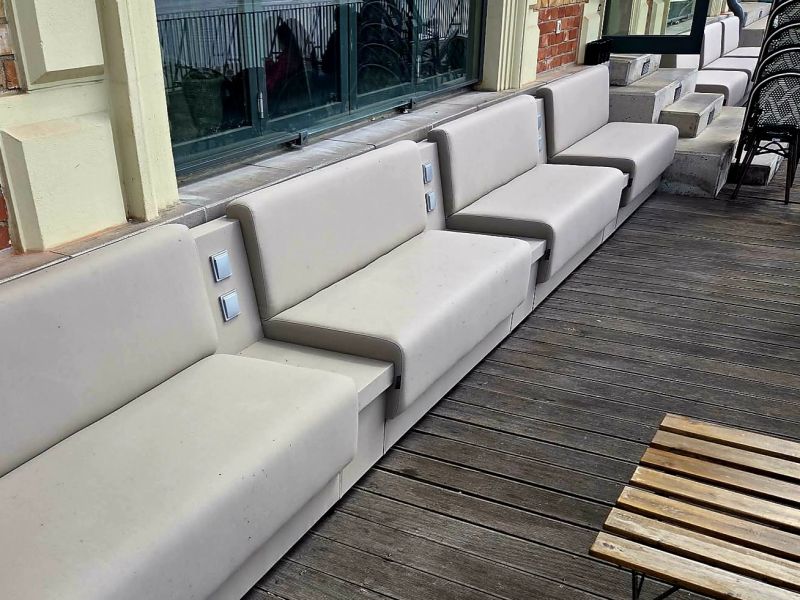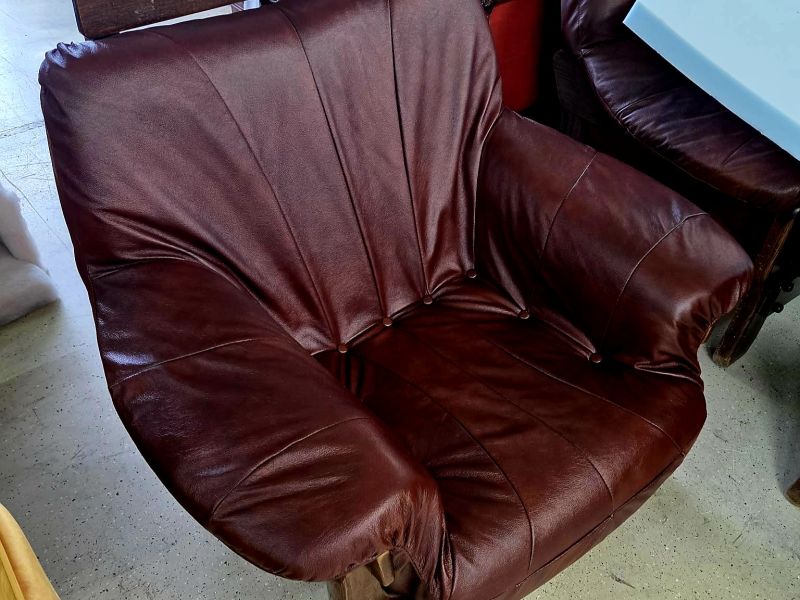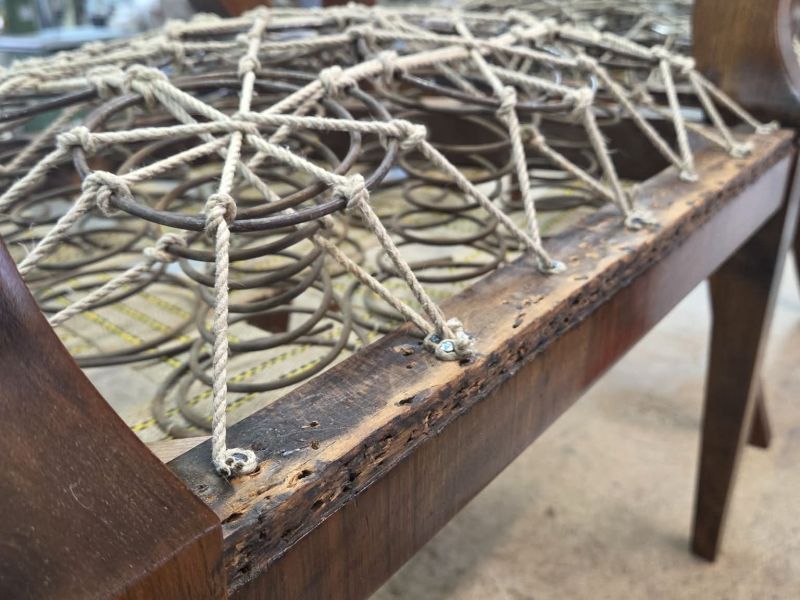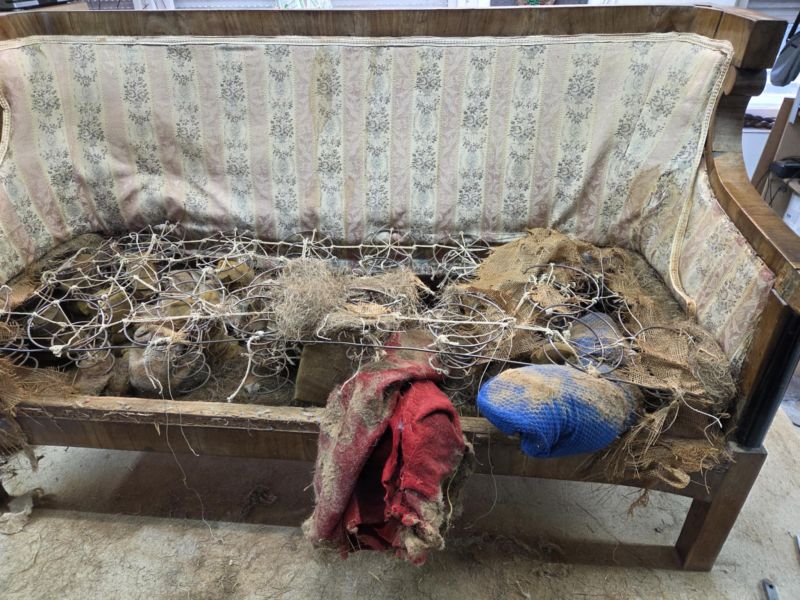

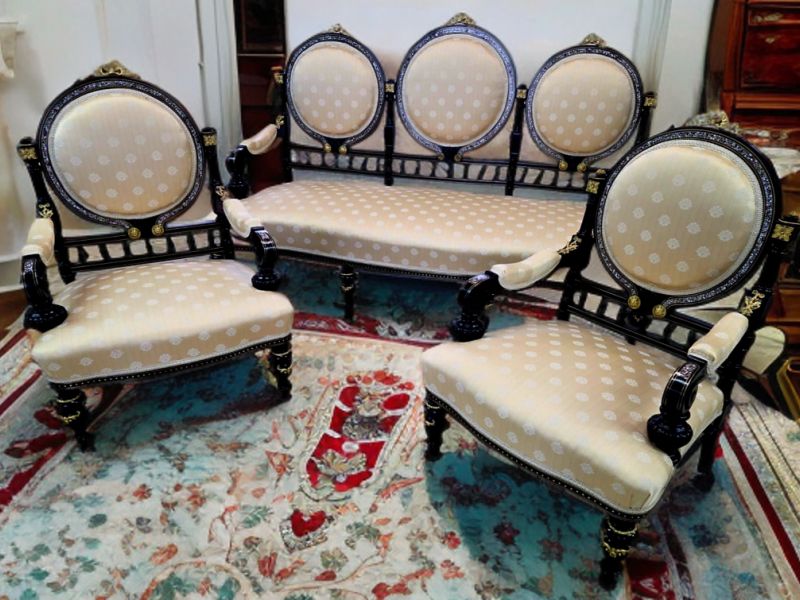
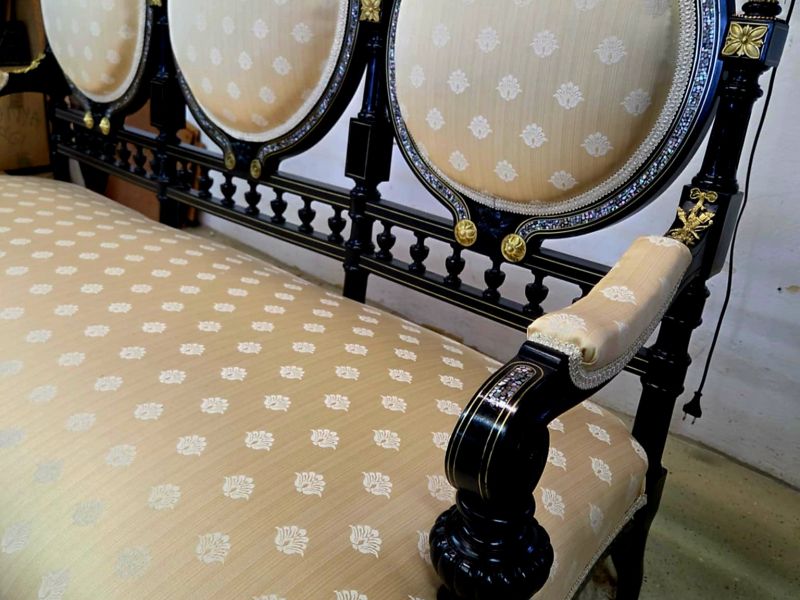
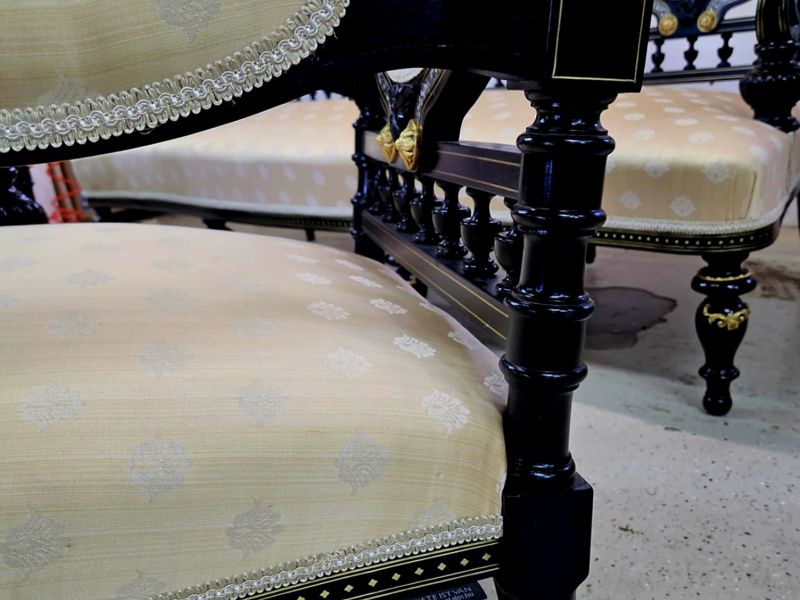
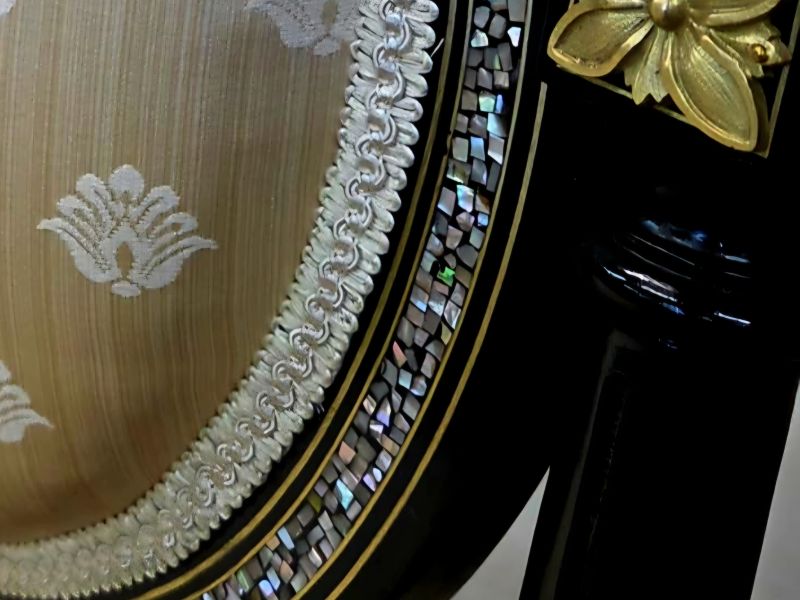
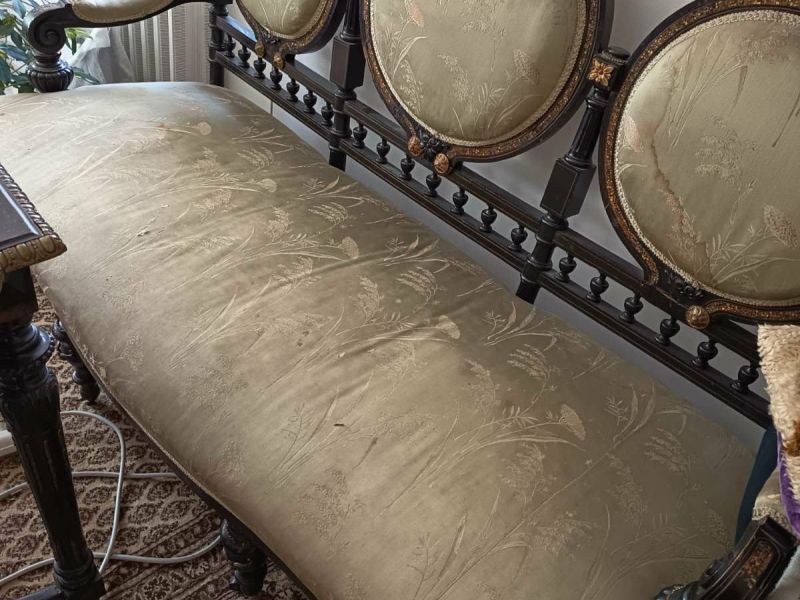
This brass- and shell-inlaid Boulle marquetry suite evokes the world of 17th–18th century French court art, although the furniture itself was made in Hungary at the end of the 19th century. I have previously written about the master after whom the technique was named, André-Charles Boulle (1642–1732), court ébéniste to Louis XIV, who revolutionized the art of marquetry by combining tortoiseshell, brass, and other precious materials. In the second half of the 19th century, this rich and highly representative decorative style was rediscovered and widely imitated across Europe.
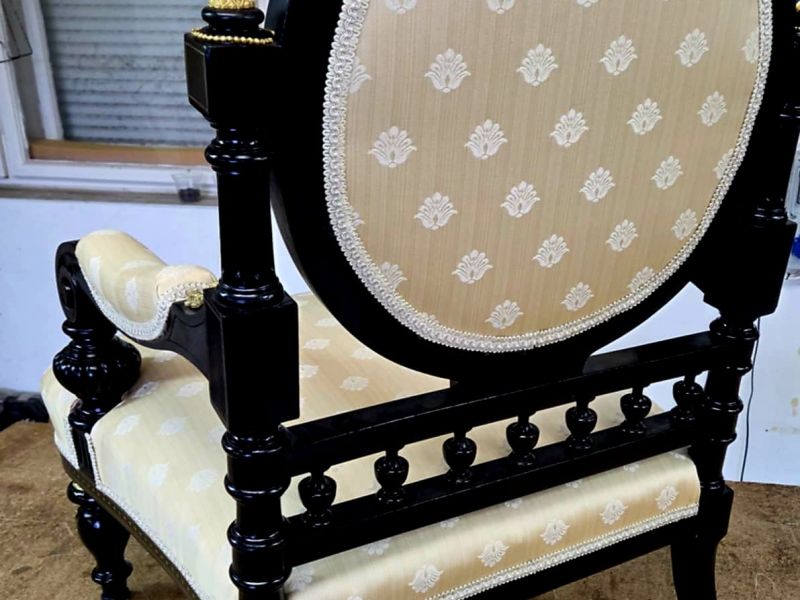
With this suite, the form itself also deserves attention: five round backrests create a solemn rhythm, complemented by pronounced, curved armrests and brass ornamentation set against a black ground. During the upholstery process, achieving perfect symmetry in the fabric pattern was particularly important. The exact center of each round back had to be precisely marked, as even the slightest deviation becomes immediately visible on such a shape.
I worked with traditional techniques, building up the correct seat height and support with African stuffing material. Proportion is crucial here: a seat positioned too low or too high would disrupt the elegance of the form. The hand-layering and shaping give the piece its full, gently curved character, harmonizing with the richness of the decoration. The light, elegant upholstery fabric was also a very conscious choice by the owner: it highlights the black-and-brass marquetry frame without drawing attention away from the inlay inspired by the Boulle technique.
I took a few photographs in the workshop, but unfortunately I was unable to photograph the piece in its final location for various reasons. So I began a small “experiment,” searching for an environment and color palette similar to the original setting, to show the atmosphere the restored furniture brings to an interior.