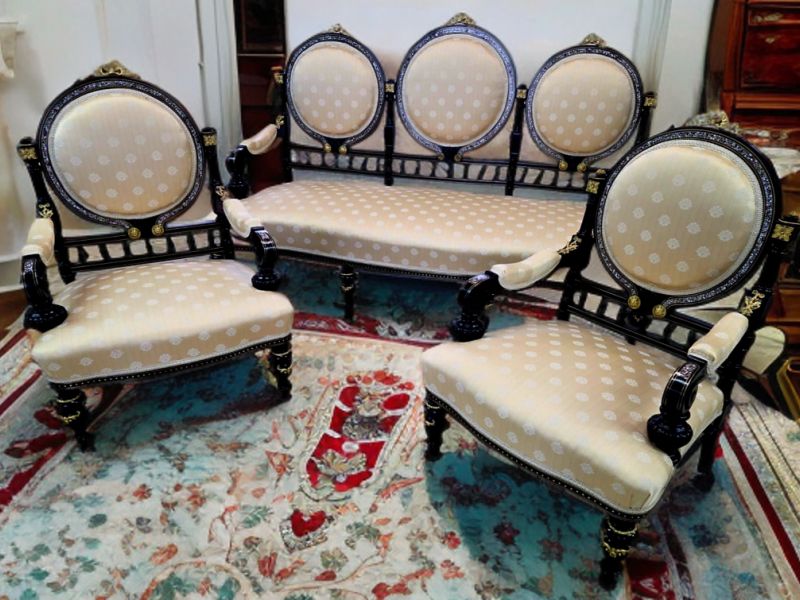

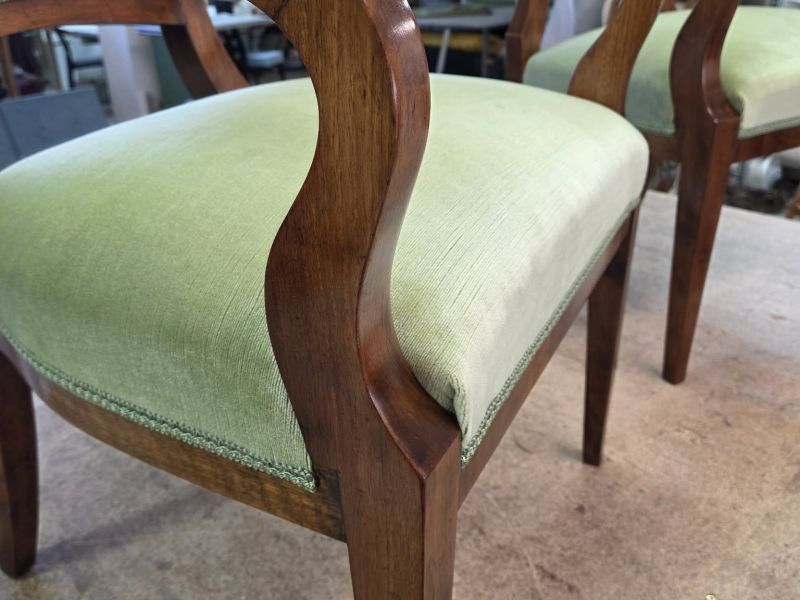
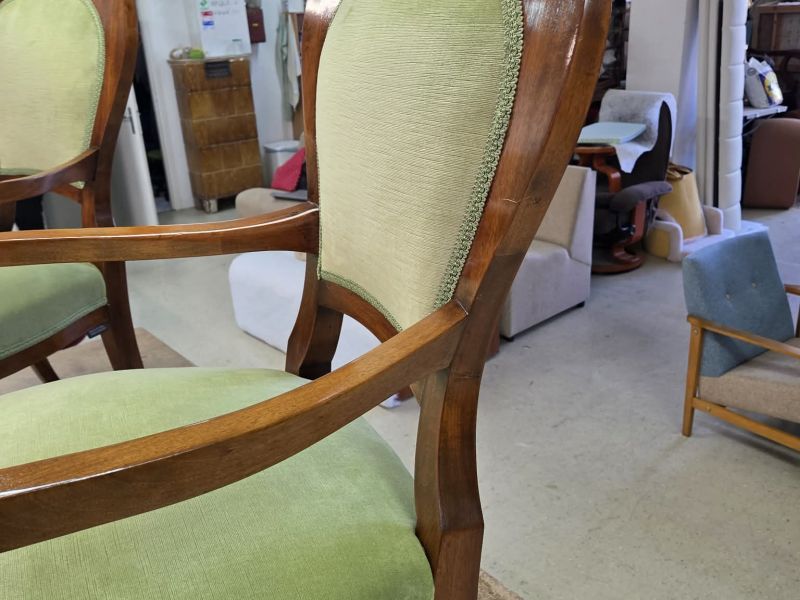
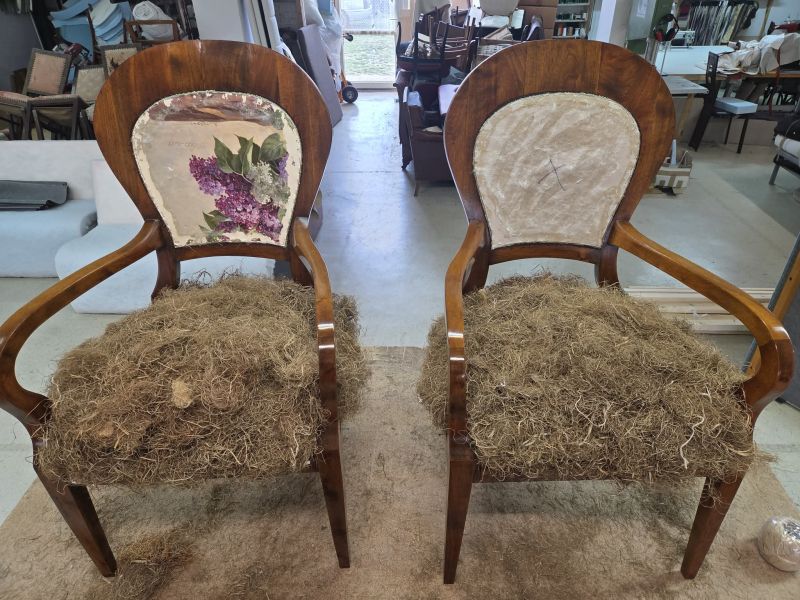
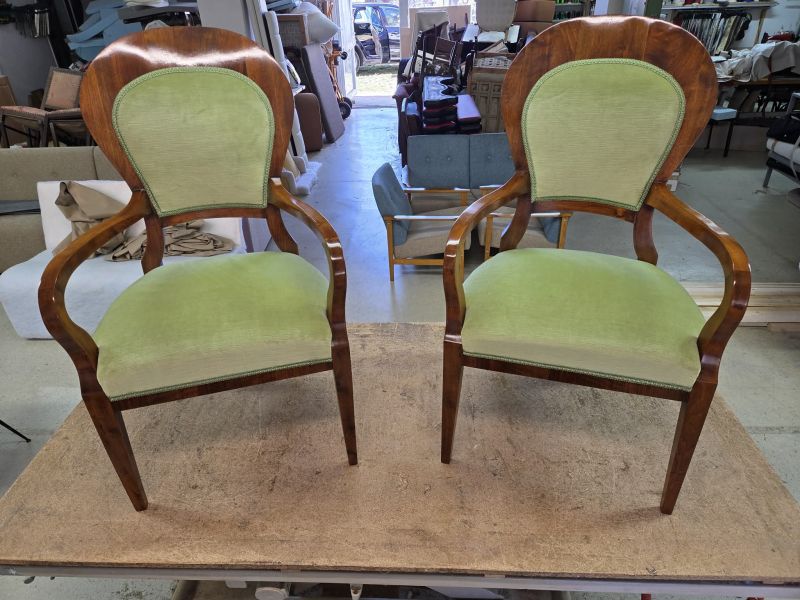
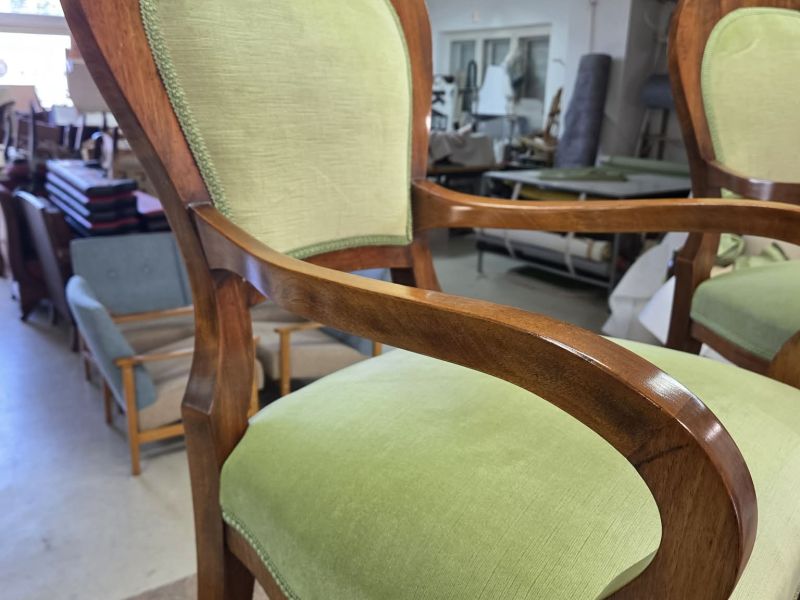
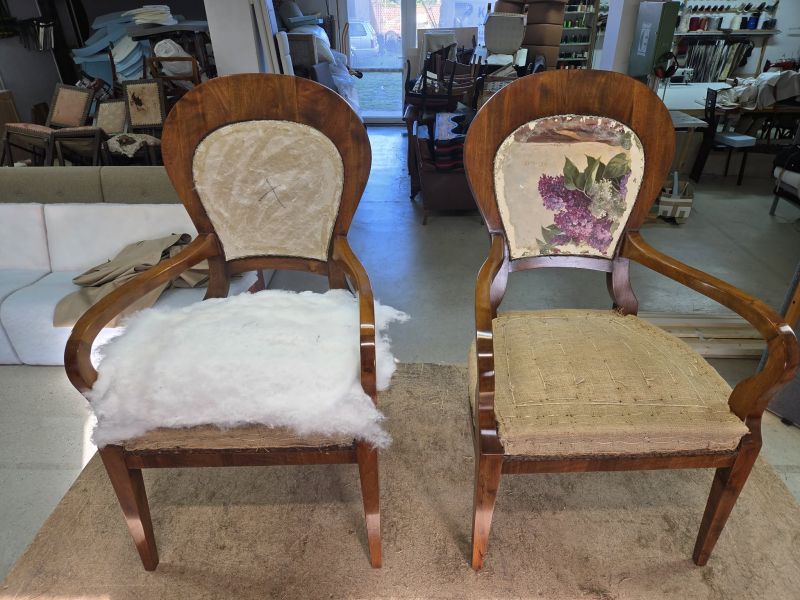
When you look at a classic Biedermeier armchair, your eyes are almost certain to be drawn to the backrest. That round, curved shape—which the trade refers to as a medallion backrest—has survived for centuries for good reason. Behind it lies a long, continent-spanning evolution of style, each stage of which has contributed something to what is worth restoring in today’s upholstery workshops.
The form’s roots trace back to 18th-century England. Thomas Chippendale, a cabinetmaker of Scottish origin, published his work *The Gentleman and Cabinet-Maker’s Director* in 1754, which was not merely a design catalog but a true watershed in the history of furniture. In this work, Chippendale documented round and oval backrest designs in a systematic format, which soon made their way to workshops on the continent as well. Without his influence, it is hard to imagine that the medallion form would have set out on the path that ultimately led it to Vienna and Pest-Buda. The next major step was taken by George Hepplewhite, whose name became known posthumously—his design manual was published by his widow after his death in 1788. Hepplewhite elevated the oval and shield-shaped backrest to a distinct, refined form, freeing it from excessive carved ornamentation.
In his work, the backrest appears as a truly separate unit that seems to float above the chair’s wooden frame—just as a medallion hangs from a necklace. This approach became the direct precursor to everything that followed in Paris and later in Vienna. In the early 19th century, Paris was considered the capital of furniture design. Charles Percier and Pierre Fontaine, Napoleon’s court designers, continued to use the medallion-style backrest in the Empire style, though at that time it was still combined with a strongly antique, Roman-inspired vocabulary—gilded, with bronze inlays, and weighted down with a sense of grandeur. It was beautiful, but it wasn’t for everyone. The real breakthrough came when Viennese and German cabinetmakers began to translate this form into the language of bourgeois life from the 1810s to the 1820s. They abandoned the gilding, they abandoned the carved ornamentation, and they retained what was essential: the clean, enclosed, harmonious oval form. Thus was born the Biedermeier medallion backrest—beauty without affectation.
The upholstered insert, which rises independently from the wooden frame, fit perfectly with the bourgeois aesthetics of the era: understated yet refined, unadorned yet not austere. From an upholstery perspective, this form also presents a unique challenge. The upholstery insert of the medallion backrest is visible from all sides; the placement of the fabric tolerates no asymmetry whatsoever, and the pattern of the material must align with the central axis of the form. This is precisely why the restoration of Biedermeier armchairs remains a litmus test of an upholsterer’s skill—a form that, in a century and a half, has not been improved upon, only imitated.