
For centuries, the throne has been a symbol of power, dignity, and authority. The first known thrones appeared in ancient Egypt and Mesopotamia, where they became the most important ceremonial pieces of furniture for kings, rulers, and ecclesiastical dignitaries. The word “throne” itself derives from the Greek term thronos, which meant a raised seat. It entered the Hungarian language via the Latin word thronus, and over time came to symbolize not merely a chair, but the very power of the ruler.
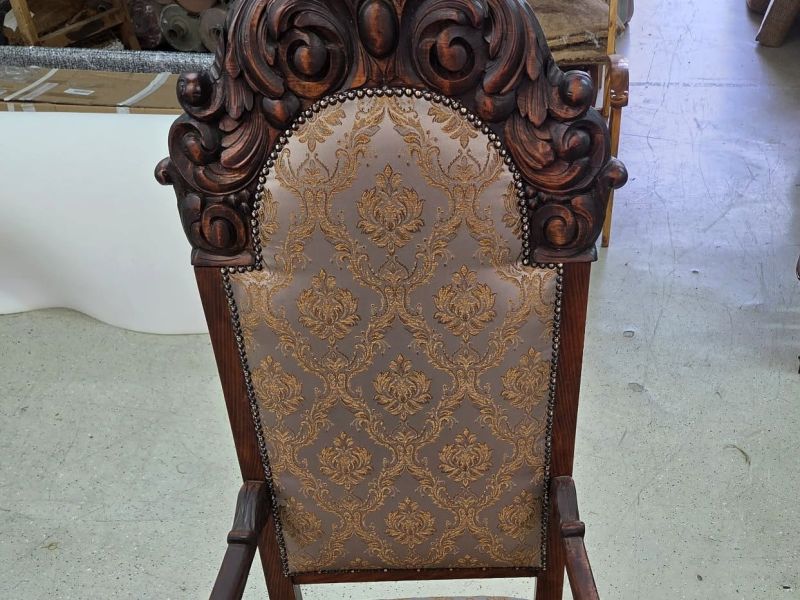
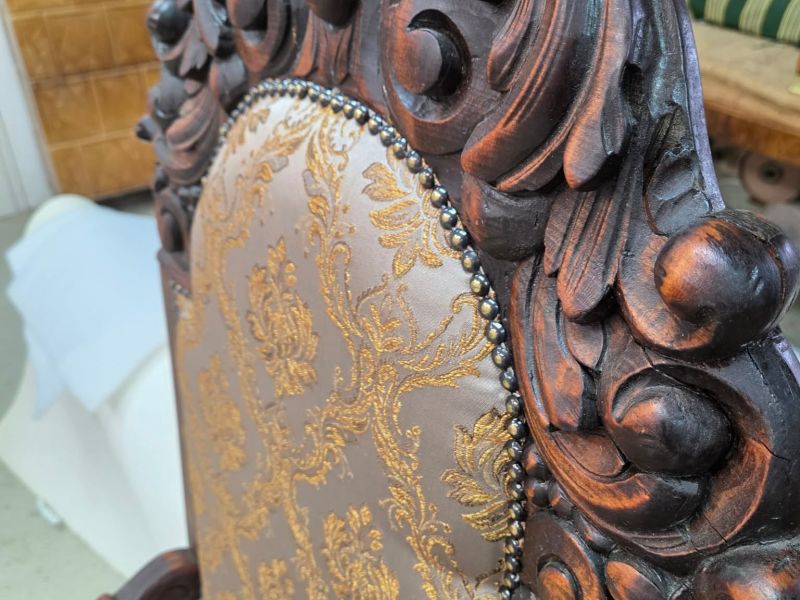
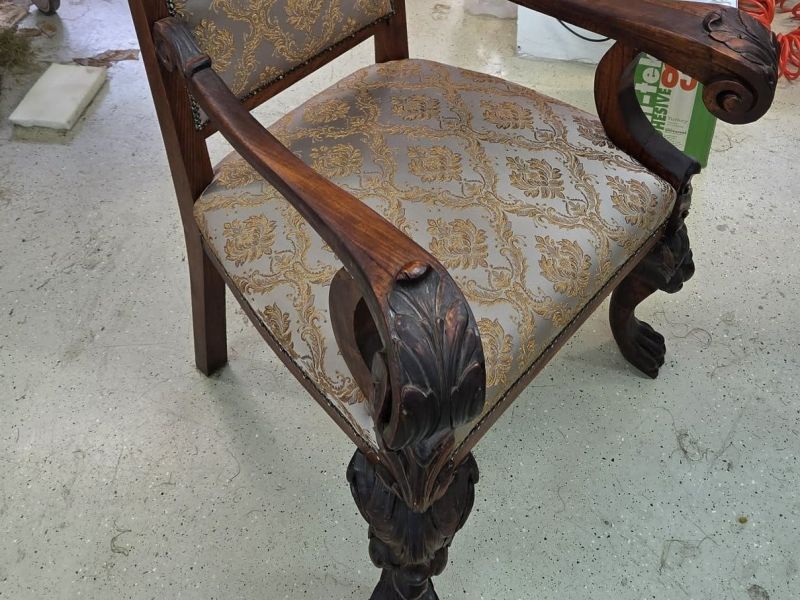
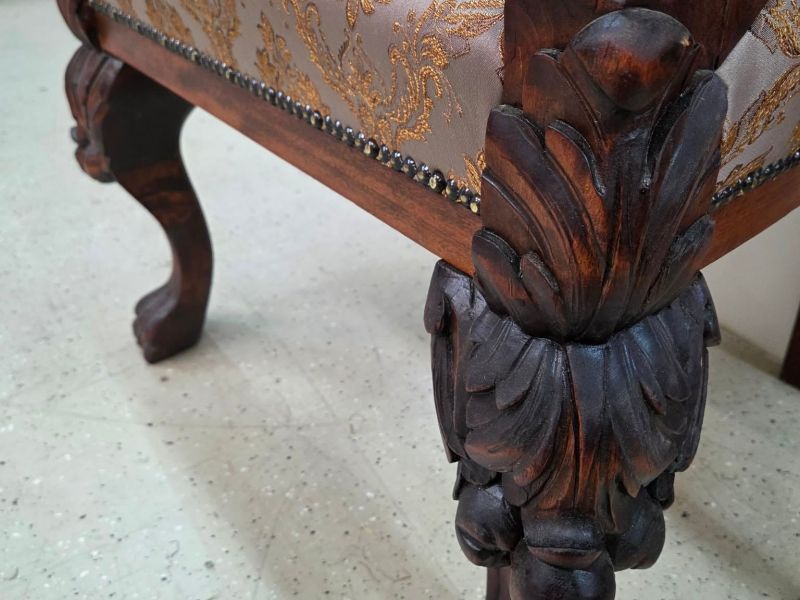
The piece of furniture shown in the picture is an example of the Neo-Baroque style. In the second half of the 19th century, during the period of Historicism, the artistic styles of earlier eras—including the Baroque—once again came to the fore. Neo-Baroque furniture is characterized by richly carved leaf and shell motifs, bold curves, a monumental appearance, and intricate detailing. The high backrest, the prominent armrests, and the front legs resembling lion’s paws are all distinctive features of this style. Such furniture primarily adorned castles and mansions, and later also enriched the interiors of prestigious bourgeois homes, where its spectacular appearance was paired with exceptional craftsmanship.
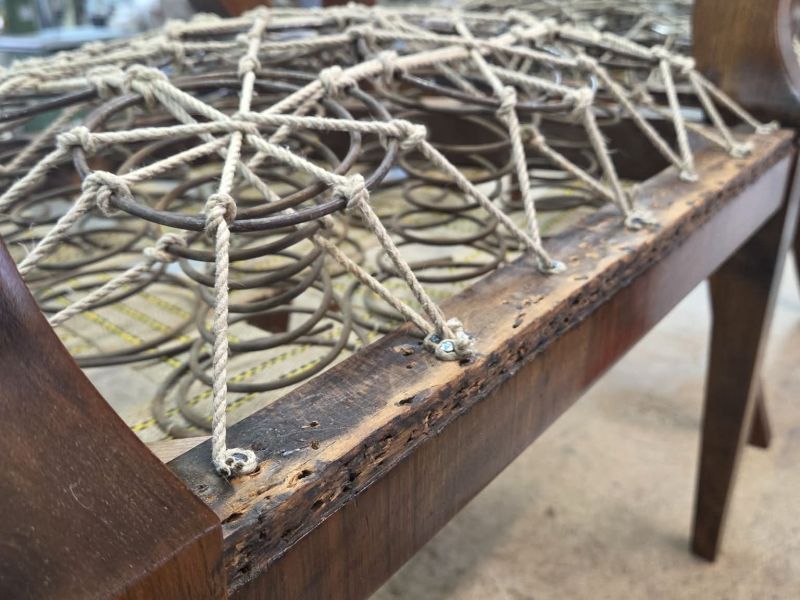
With furniture like this, the upholstery plays just as important a role as the carved wooden frame itself. The throne arrived at the workshop without its pair, but it will still dominate the space perfectly. The upholstery features an interesting play of light and pattern; this 3D silk-effect fabric, chosen by the client, subtly shifts its shades depending on the angle of the light, while the pattern lends the upholstery an elegant depth. This fabric, produced using modern weaving technology, is distinctive and elegant; it is durable and easy to care for, meeting today’s standards, making it an excellent choice for this piece of furniture. During the restoration, we naturally used traditional techniques, and the surface of the furniture was polished.